The Amazon rainforest is disappearing at an alarming rate. 2019 marked a sad record with over 9100 km² cleared that year alone. Our projects are part of the fight against this deforestation and are deployed in the Amazonian region of San Martin in Peru, one of the most affected in the country.
This rural region, which was ravaged by drug trafficking in the 1980s, is now opening up and developing economically, becoming a leading region for the production of rice, cocoa, corn, bananas and palm oil. Slash-and-burn agriculture is now applied on larger and larger areas to grow cash crops or cattle, according to productivist models based on the intensive use of chemical inputs and without any environmental consideration.
Our response: Forestera SCA
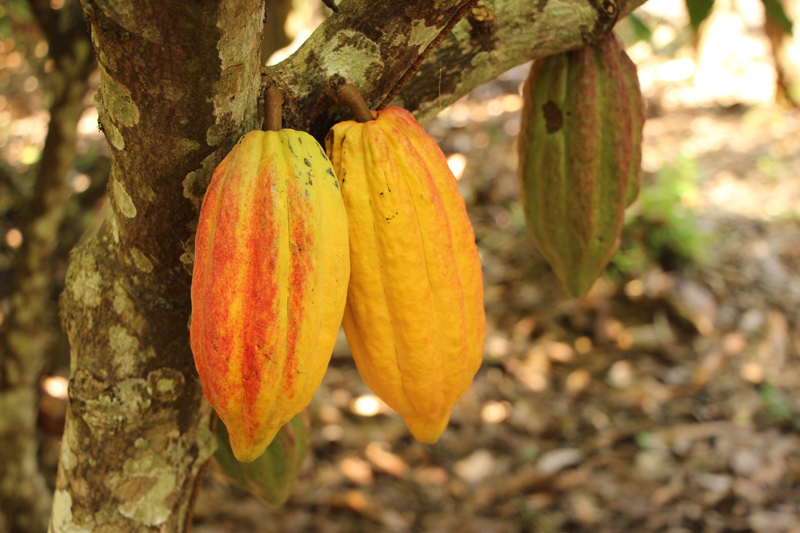
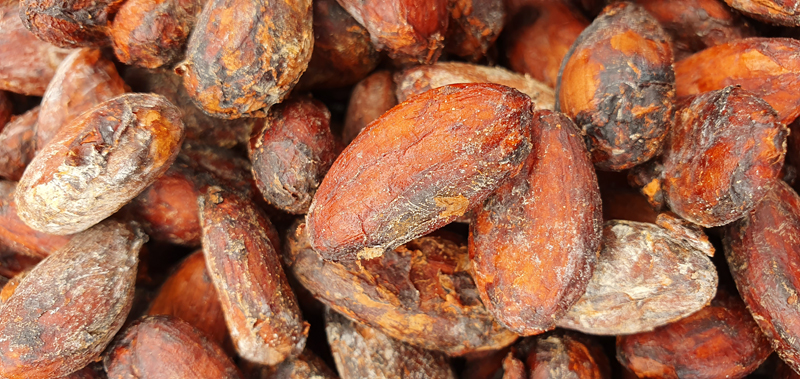
Our projects are located next to the communities of Ishichihui, Huaja and Agua Blanca and are based on an alternative landscape dynamic to what is observed in the region. We have designed an agroforestry system that integrates the local singularities. The aim is to combine the production of fine and aromatic cocoa varieties with the existing biodiversity anchors, the fauna and flora functions present in the ecological corridors, rivers and hedges.
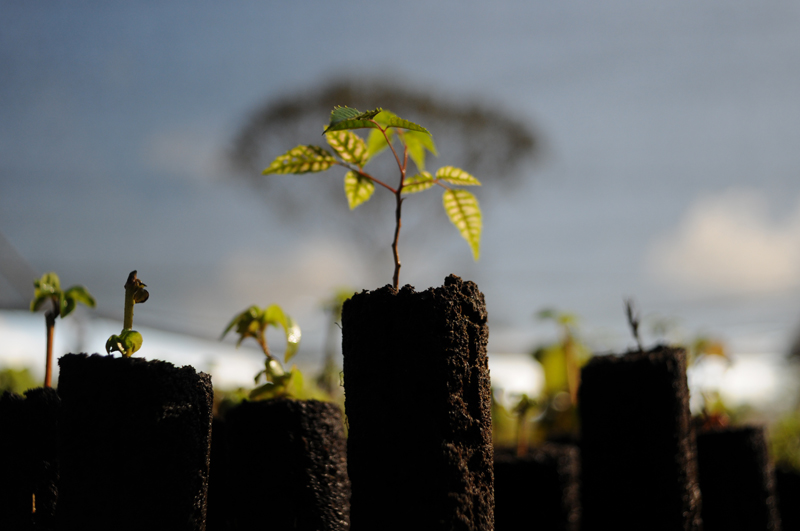
The main challenge we face is the restoration of the soil and the fight against erosion, a sine qua non condition for the reconstruction of a territory. The first challenge, once the invasive weeds are under control, is to plant species capable of developing in difficult conditions to recreate a pedological dynamic and decompact these asphyxiated soils. Then, little by little, to replace these species with others that are more adapted, productive species, such as cocoa, and to build a plant succession that will lead, in the long run, to a diversified and productive agroforestry area, on a soil that is progressively regaining its fertility.
Our track record
Since 2017, we have restored 200 ha of deforested landscapes thanks to the implementation of agroforestry systems. The project is managed directly on-site by an exclusively Peruvian staff. In addition to the 40 permanent job positions already created, an extra 15 to 25 employment positions are created monthly for our new seasonal activities. The management/administrative team is mostly comprised of women. We have established a continuous monthly training program for all employees, their families, and the members of the community. We also support the community in environmental subjects (waste recycling, composting) and social matters (medical care, conversations with public institutions).
Our partners
Nous utilisons des cookies pour vous garantir la meilleure expérience sur notre site web.